Nobody knows who first made wine, or where. Crushed grapes left in a pot will start to ferment by themselves, so people may have stumbled on wine many times over. What archaeologists can find is evidence: traces of wine in old pots. On that evidence, the oldest grape wine found so far comes from Georgia.
Georgia, c. 6000–5800 BC
In 2017 a team of archaeologists and chemists published their analysis of pottery from Gadachrili Gora and Shulaveris Gora, two villages south of Tbilisi from the Neolithic, the New Stone Age, when people first farmed. They found the chemical traces of grape wine in eight clay jars, and dated the winemaking to c. 6000–5800 BC. The oldest of eight jars, about 5980 BC, is where our name comes from. There is more on the dig on Georgia: The origins of wine, and When was wine invented? follows wine from here into Europe.
Iran, 5400–5000 BC
Before the Georgian results, the record belonged to Hajji Firuz Tepe, a Neolithic village in the Zagros Mountains of north-west Iran. Excavators found a row of jars sunk into the floor against the wall of a kitchen. One of them, now in the Penn Museum in Philadelphia, held about nine litres and is dated to 5400–5000 BC. A reddish residue inside tested positive for wine and for the resin of the terebinth tree, which was probably added to stop the wine turning. The results were published in Nature in 1996.
Armenia, 4100–4000 BC
Areni-1 is a cave in the south of Armenia, and in 2011 a team led by Hans Barnard of UCLA reported wine there. They found the winery too: a shallow clay basin about a metre across, used as a press, sloped so the juice ran into a vat about 60 cm tall, with storage jars, a drinking cup made from a horn and a clay bowl. There were grape seeds, pressed grape skins and dozens of dried vines, all of the domesticated grape still used for wine today. Radiocarbon dating puts it at 4100–4000 BC, the oldest winery yet found.
China, about 7000 BC
The oldest of all is not quite wine. At Jiahu, a Neolithic village in northern China, chemists found residues in pottery jars about 9,000 years old. The drink was a mixture of rice, honey and fruit, the fruit being hawthorn or grape, or both. It is older than the Georgian jars, but it was a mixed fermented drink rather than a wine made from grapes.
So what does "oldest" mean?
It means the oldest found. Any of these dates could be beaten by the next dig. Pottery is what makes the finds possible: fired clay holds traces of what it held for thousands of years, where skins or wood would have rotted. For wine made from grapes, Georgia's jars are the oldest so far. That is the claim we make, and it is the only one.
How they made it
The finds say little about method, beyond the press and vat at Areni and the jars in Georgia. Georgians still make wine in clay jars buried in the ground; how a qvevri works explains the method.
The Mother of Georgia
For a sense of how much wine still means in Georgia, look at the hill above Tbilisi. On Sololaki hill stands Kartlis Deda, the Mother of Georgia, a figure 20 metres tall. The sculptor Elguja Amashukeli made her in 1958, for the city's 1500th anniversary, and the aluminium figure there now dates from 1997.
In her left hand she holds a bowl of wine for those who come as friends. In her right she holds a sword for those who come as enemies. The Soviet-era mother statues in Kyiv and Volgograd hold only weapons. Kartlis Deda offers wine first.
Georgians have a saying that a guest is a gift from God, and the statue puts that welcome plainly: wine for the guest, the sword only for anyone who comes with bad intentions. At the table the welcome takes the shape of the supra, the Georgian feast, with its toastmaster and its order of toasts. We wrote about it in Georgian supra.
UNESCO, listing the qvevri method in 2013, noted that wine plays a vital part in everyday life in Georgia, and that the wine cellar is still thought of as the holiest place in a family home.
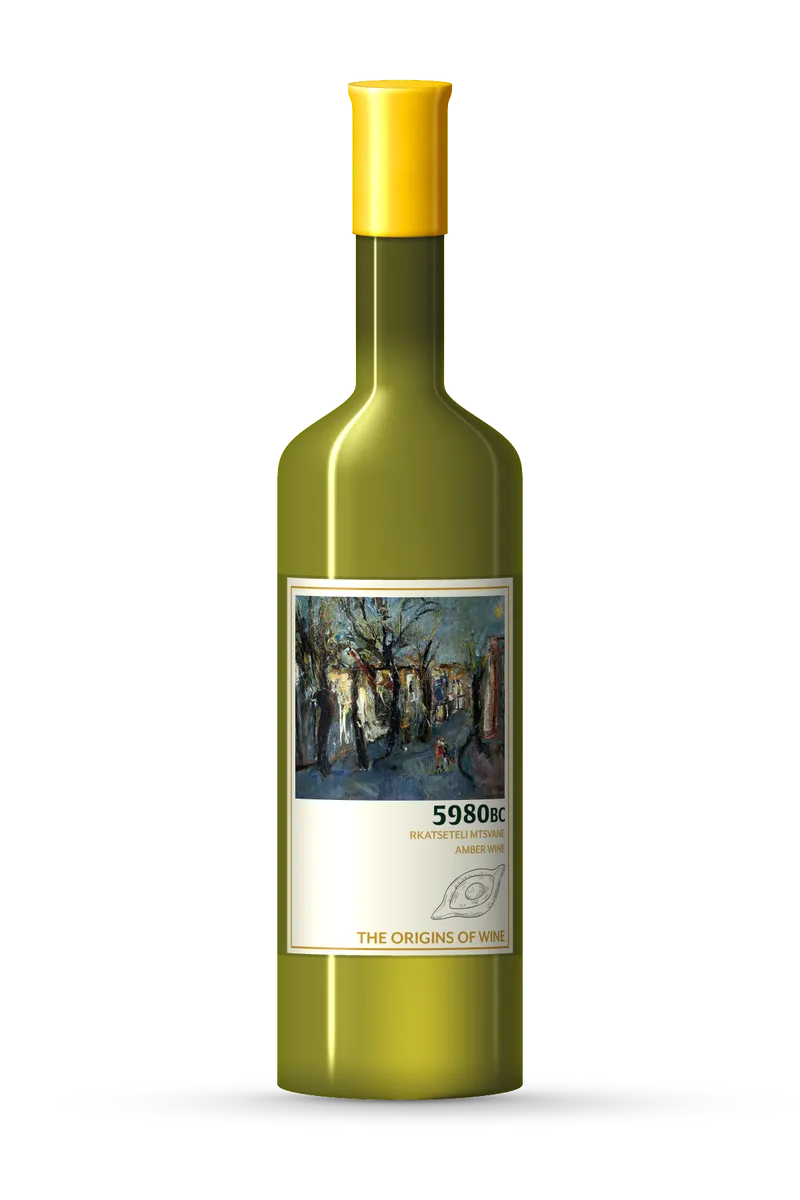
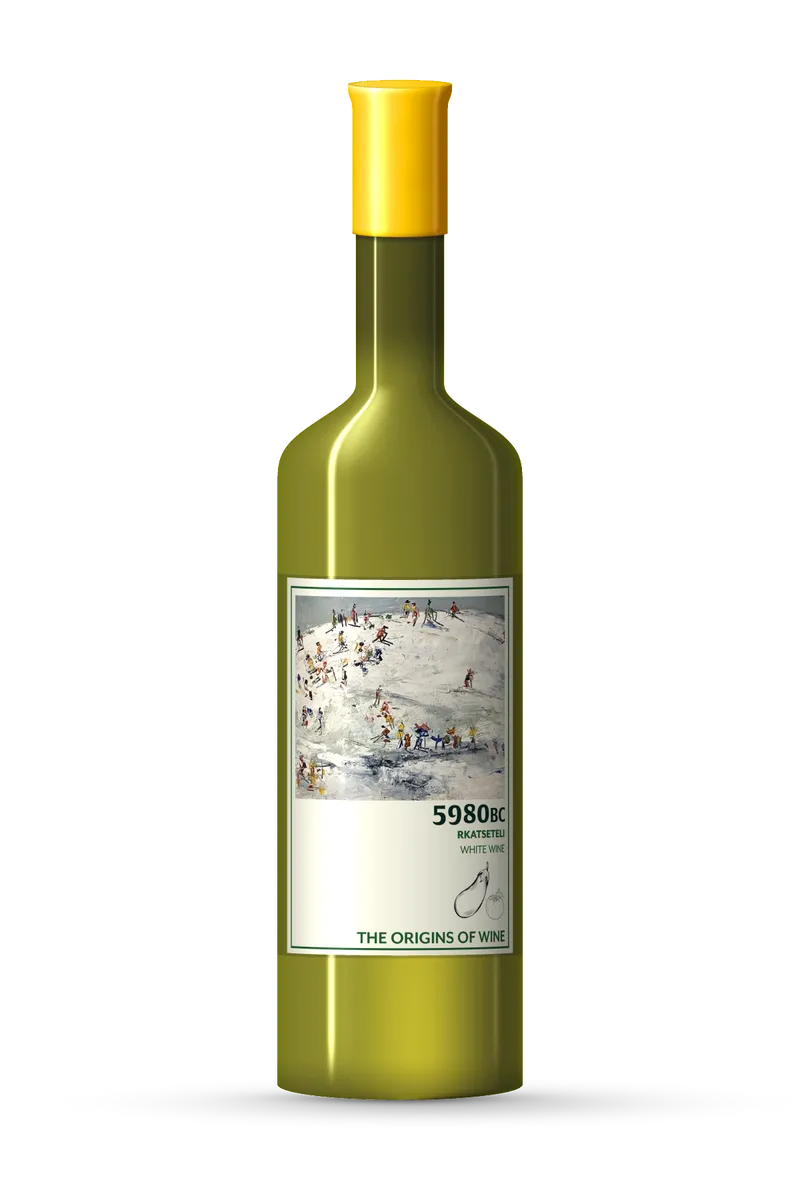
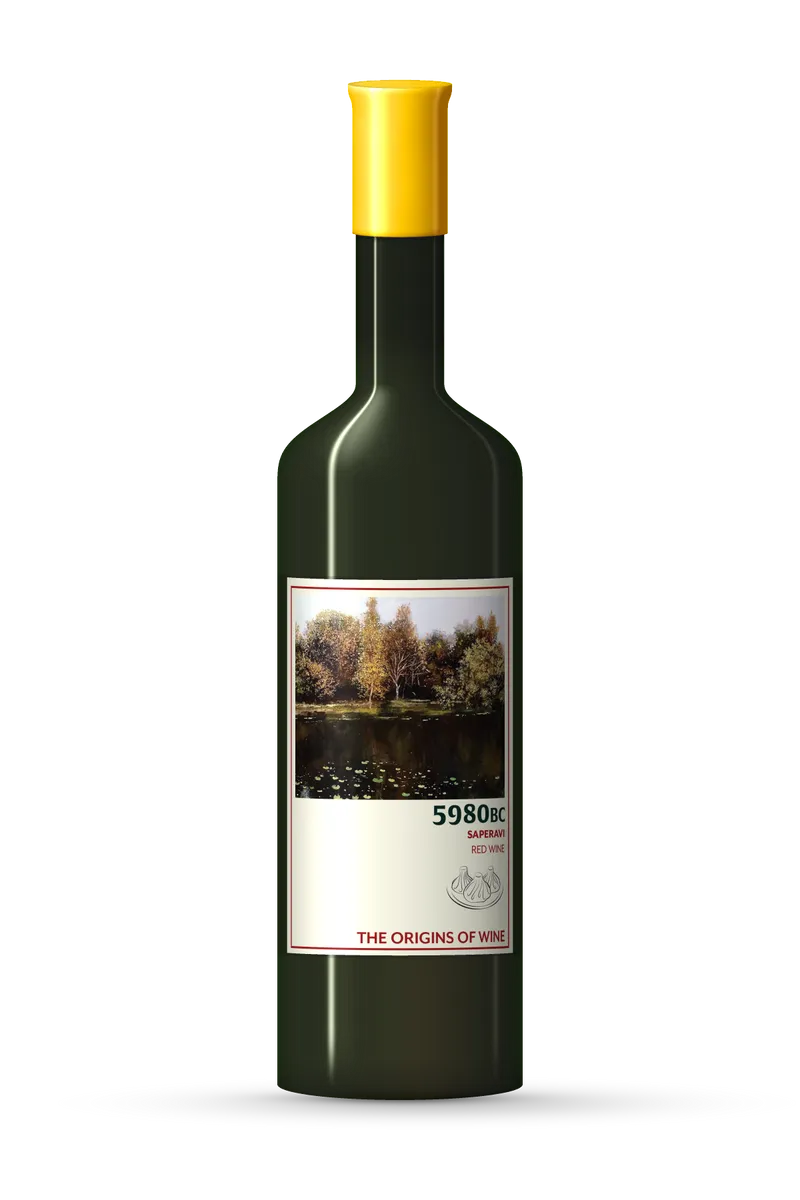
Our own three wines, Rkatsiteli Mtsvane, Rkatsiteli and Saperavi, are made in clay in Kakheti.
Sources
- Early Neolithic wine of Georgia in the South Caucasus. Proceedings of the National Academy of Sciences 114(48), E10309–E10318, 13 November 2017.
- 'World's oldest wine' found in 8,000-year-old jars in Georgia. BBC News, 13 November 2017.
- The Origins and Ancient History of Wine: Neolithic period. Penn Museum.
- Wine jar, Hajji Firuz, 5400–5000 BCE. Penn Museum collection, object 69-12-15.
- Earliest known winery found in Armenian cave. Meg Sullivan, UCLA, via Phys.org, 11 January 2011.
- Penn Museum archaeochemist and international scholars confirm 9,000-year history of Chinese fermented beverages. University of Pennsylvania, 7 December 2004.
- Ancient Georgian traditional Qvevri wine-making method. UNESCO Intangible Cultural Heritage, inscribed 2013.
- Kartlis Deda, Mother Ukraine and The Motherland Calls. Wikipedia.