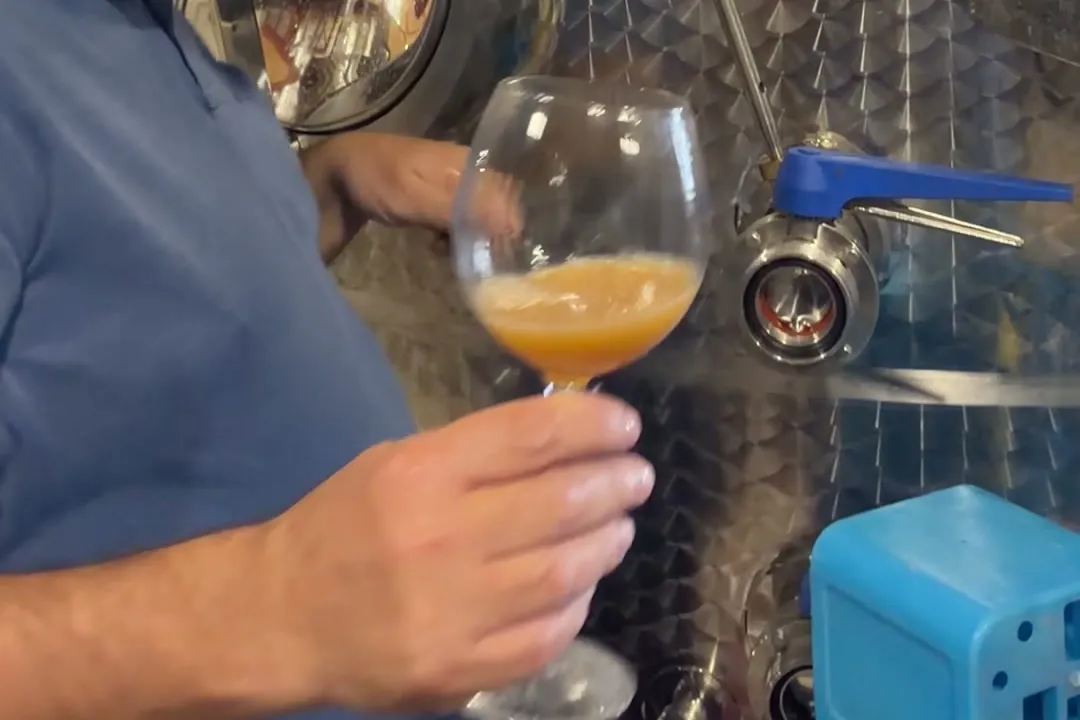
Orange wine is white wine made like a red. Usually white grapes are pressed straight away and only the juice is fermented. For an orange wine the juice ferments with the skins still in it, and in Georgia the pips, and often the stalks, go in too. The skins give the wine its colour, somewhere between gold and deep amber, and some tannin: the slightly drying grip you get from red wine or strong tea.
Nothing is added for the colour. It comes from the skins, the same way a red wine gets its colour from red grapes.
Orange or amber?
They are two names for the same style. "Orange wine" is the one most people in Britain know, and it was coined here: the wine merchant David Harvey started using it in 2004, because these wines had no colour name of their own the way white, rosé and red do. "Amber wine" is the name you will see on many labels, Georgian ones especially. In Georgia we saw it on bottle after bottle, and it is the name we use. You will also see "skin-contact wine" on wine lists. Nobody has a legal definition of any of the three.
An orange wine is not a rosé. Rosé is made from red grapes, and the juice spends only a short time with their skins.
Where it comes from
Georgia has made wine in clay jars for about eight thousand years (here is the evidence), and it still does. The jar is a qvevri (say KVEV-ree; also spelt kvevri), egg-shaped and buried in the ground, and leaving white grapes in it with their skins for months is the old way of Kakheti, Georgia's main wine region. How a qvevri works is a story of its own.
The rest of the world caught on late. The Italian winemaker Joško Gravner, in Friuli near the Slovenian border, went to Georgia in 2000 to buy qvevri, and by 2001 he had eleven of them buried at his winery. Italian and Slovenian winemakers who followed him did much to bring skin-contact whites back into fashion, and in Georgia itself the tradition revived after independence in 1991.
What it tastes like
An orange wine smells and tastes more like a white than a red: fruit, flowers, often something like dried apricot, orange peel, honey or tea. Then comes the grip. The tannin dries the mouth a little, as a light red would, while the acidity keeps it fresh. That combination is why we think of these as wines for the table rather than for sipping on their own.
For a fuller description of one grape made this way, see Rkatsiteli (say r-kats-i-TEL-ee), Georgia's main white grape.
What to eat with it
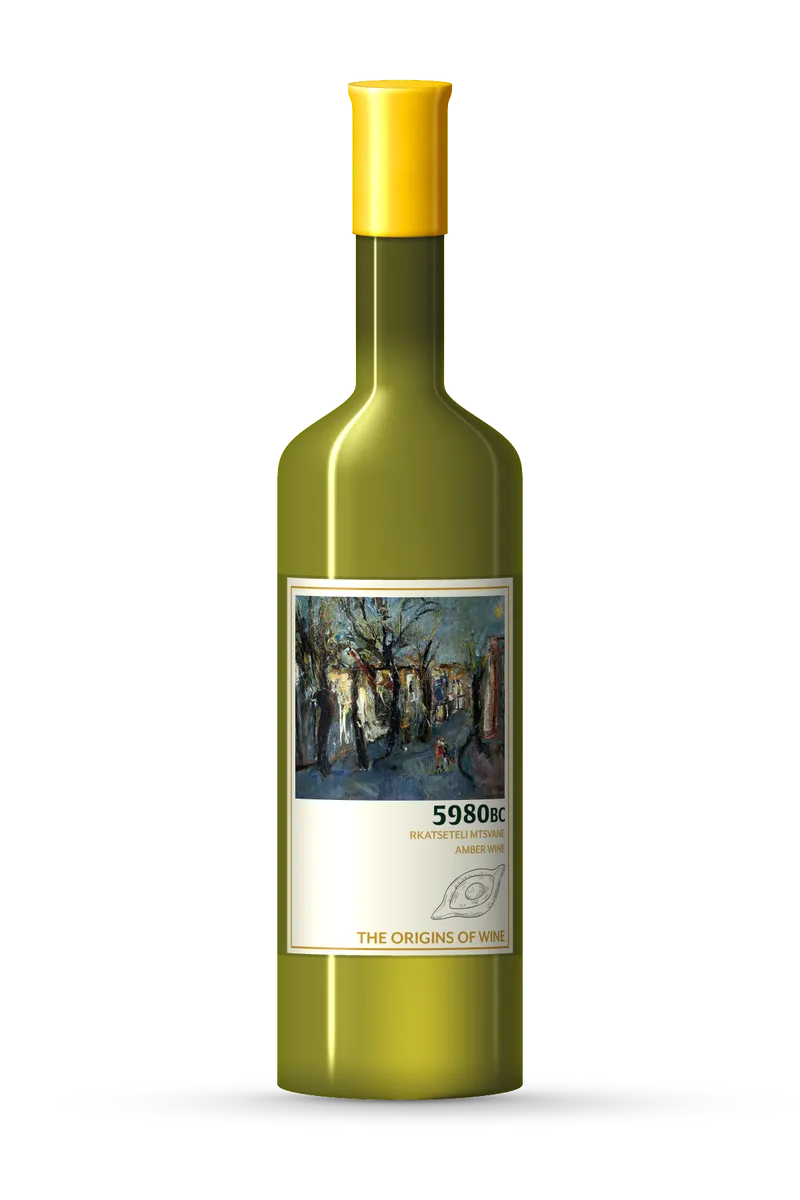
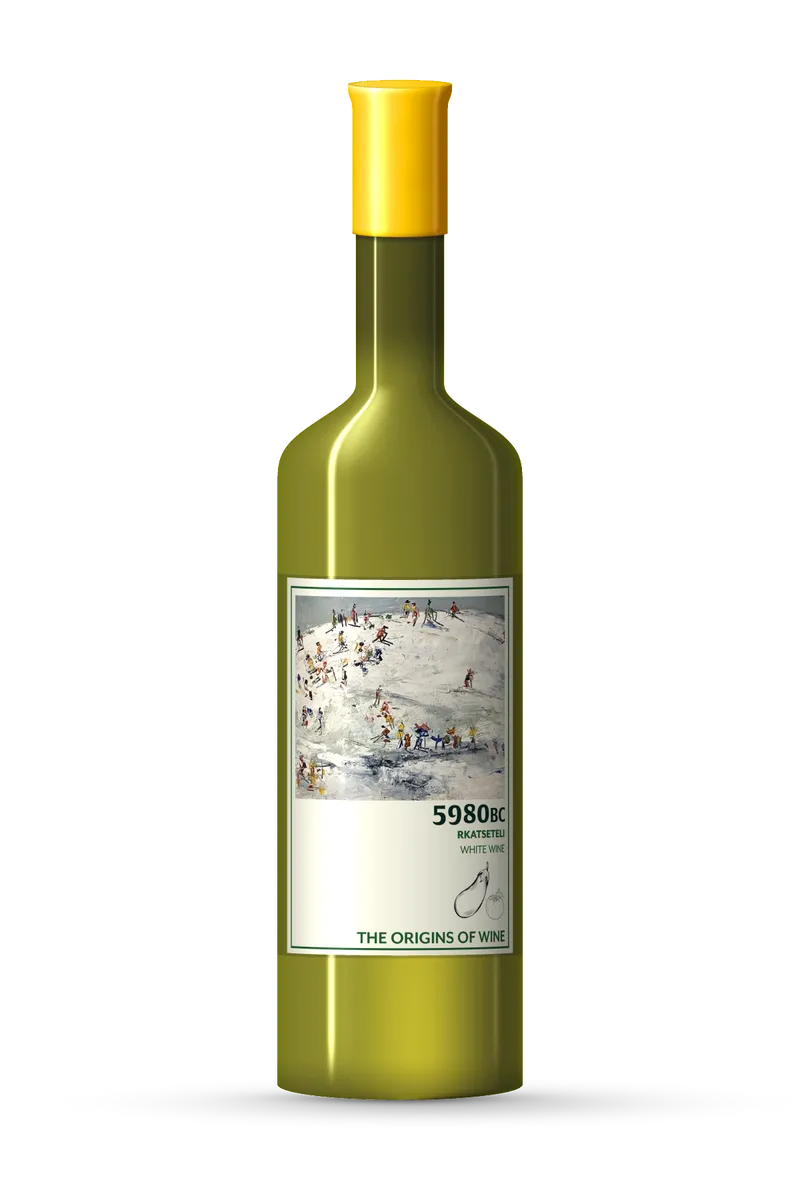
The grip means an orange wine copes with food that would swamp a light white. Our Rkatsiteli Mtsvane is ideal with cheese, from khachapuri, Georgia's cheese bread, to a cheeseboard; there is more in Georgian cheese. Our Rkatsiteli is ideal with vegetables and nuts, such as pkhali, the Georgian vegetable and walnut pâtés.
Quick answers
Is orange wine made from oranges?
No. It is made from white grapes. The name is only about the colour.
Is orange wine sweet?
Usually not. Most are dry, including both of ours, and the tannin can make them seem drier still.
Is orange wine natural wine?
Not necessarily. Many orange wines are made with very little intervention, but the term only describes how the colour is made. What is natural wine? covers the rest.
We first tasted our two ambers in Tbilisi, with the family who make them. Both are from the 2024 vintage and made in qvevri in Kakheti.
Sources
- Orange wines are now a thing, but who invented the term? Jamie Goode, Wine Anorak, 21 August 2019.
- Georgian amber wine. Georgia.to: "amber" is the term preferred in Georgia.
- Josko Gravner: the Sprudge wine interview. Alexander Gable, Sprudge, 10 February 2021.
- Orange wine. Wikipedia: the Italian and Slovenian revival, Georgia after 1991.
- What lies beneath qvevri wines? Chris Boiling, International Wine Challenge, 3 November 2020.